Common Cricket Wedding Cake Mistakes and How to Avoid Them
The cake is the only part of a cricket wedding that has to perform twice: once in the photographs, then again on a plate. Most cake disasters aren't bad luck. They're small decisions made weeks earlier — a top-heavy topper, a buttercream finish in a hot marquee, a table set on soft grass. Get those decisions right and the cake does its job quietly. Get them wrong and you find out at the worst moment, usually while someone is holding a phone.
The Topper That Tips Over
Cricket toppers are the usual culprit. Sugar paste stumps, a miniature bat, tiny figures fielding on a fondant square — they look light in the hand, but put a tall, narrow object on the crown of a tier and you've raised the cake's centre of gravity. Add a breeze through an open-sided marquee and gravity wins.
Three fixes work reliably:
- Move the scene down. Build the cricket moment on the cake board at the base — a pitch, a set of stumps, two figures — rather than crowning the top tier. It's more stable and easier to see from guest height.
- Anchor through, not onto. A wooden skewer or dowel pushed down through the topper, through the top board and into the tier below will hold almost anything. Ask your baker to do this rather than balancing the topper on royal icing.
- Widen the base. If you love a tall bat-and-ball topper, have it mounted on a disc slightly smaller than the tier so it can be pinned in two places.
Also check the weight before delivery. A topper that feels heavy dry will be heavier once it's sitting in humid air for four hours.
Fondant, Heat and Humidity
Fondant is sugar, and sugar takes on moisture. In a warm room it goes soft and glossy; in a humid one it sweats, colours bleed into each other, and sharp cricket details blur at the edges. Buttercream slumps more slowly but pipes soften and droop. Fresh cream, in a warm outdoor setting, is a genuine risk and not one worth taking.
What usually goes wrong
Condensation, not heat, causes most visible damage. A fondant cake chilled overnight and then unwrapped in a warm tent will bead with water within minutes. If the cake must be refrigerated, keep it boxed and let it come back to room temperature gradually before anyone lifts the lid. Transport in a cool car with the air conditioning on, not in a hot boot, and keep it out of direct sun even under a marquee — shade moves through the afternoon, so pick the table with the venue, not by eye on the day.
If your date falls in a hot month, a ganache or fondant finish will behave better than cream, and a dense madeira or mud cake holds up far better than a light sponge with mousse filling.
If the cake has to cross grass in July, treat structure and temperature as your two main design constraints — and let the decoration follow.
Tiers, Tables and Uneven Ground
Every tier needs its own board and its own internal dowels. A quote for a three-tier cake with no mention of internal support is a warning sign, not a bargain. Ask directly: how many dowels, how many boards, and how the tiers are secured to each other and to the base.
Then look at where it will stand. Grass is soft and rarely level, and a folding table on grass moves when guests lean on it. A lightweight cake stand on a wobbly table is the most common cause of a cake landing face-down. Ask the venue for a table on a solid floor if one exists, and if it doesn't, bring a spirit level and some folded card to shim the legs. Weight the stand or use a base board wider than the cake so a knock doesn't topple it.
Finally, ask about access. Gravel paths, steps and long carries from a car park all matter when someone is walking with a stacked cake.
Flavour Pairings That Fail Outdoors
Guests have usually eaten a full meal by the time cake arrives, and they're standing in the warm. Rich chocolate ganache over dense sponge is wonderful in November and heavy in a July garden. Match the flavour to the venue and the hour.
- Daytime garden party: lemon, elderflower, raspberry, pistachio, vanilla with fresh-tasting curd.
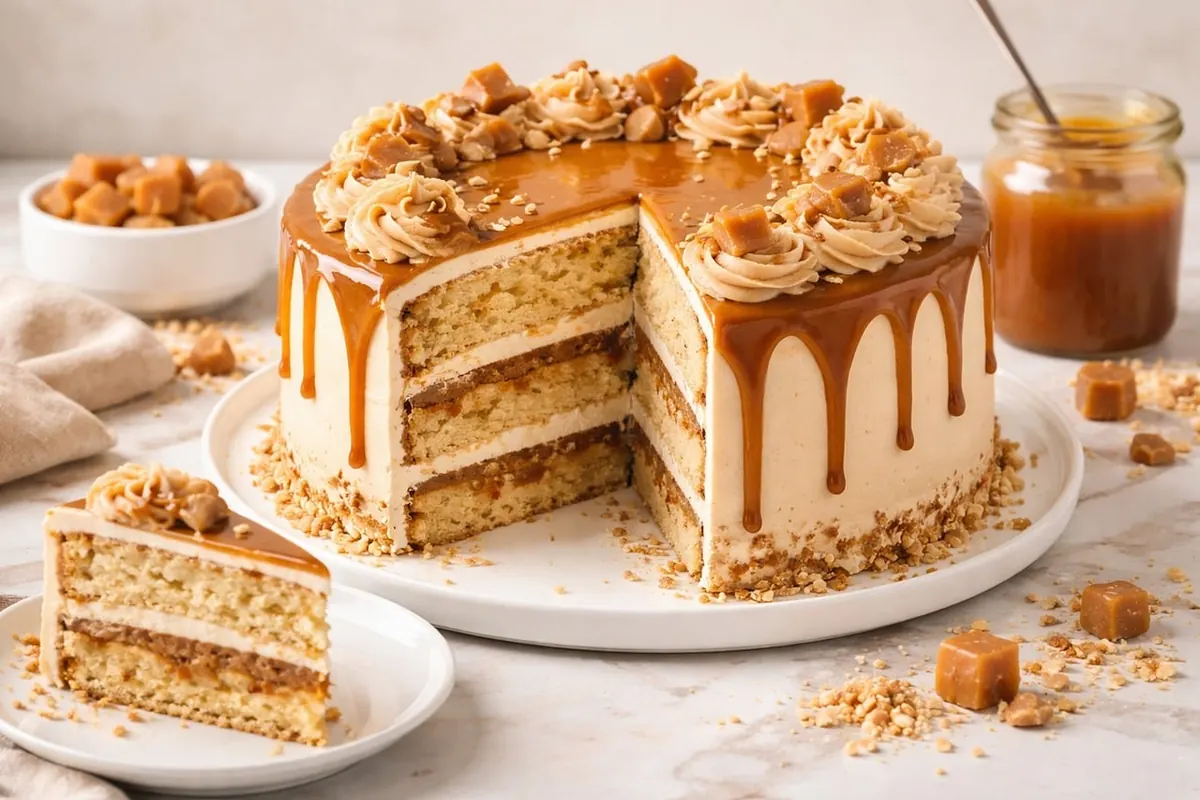
- Evening marquee: salted caramel, coffee, dark chocolate, spiced fruit — richer flavours feel right after dark.
- Avoid: sliced fresh strawberries folded into cream, which weep and make tiers slip; and ice cream cakes unless the venue has genuine freezer space.
A simple rule: one bold flavour, one light one, and a neutral buttercream to hold them together. Ask for a tasting of the exact filling you'll serve, not just the sponge.
The Theme That Swallows the Cake
Three bats, a ball, stumps, a scoreboard, bunting and a monogram is not a design — it's a trophy cabinet. Choose one hero element and let it carry the theme: stumps as the topper, a stitched seam piped around the base, a green-and-cream palette with leather-red accents.
Scale is the other trap. Figurines and props often arrive either tiny or enormous. Ask for a sketch with rough dimensions before the bake, or commission the topper first and build the cake around it. Keep the palette tight, too — two similar greens fighting each other read as a mistake rather than a theme. And tell your caterer plainly which parts are props, so nothing inedible reaches a plate.
Ordering, Cutting and the Last Hour
Book a bespoke design six to nine months out if you're marrying in peak season, and confirm guest numbers with your caterer before you settle on size. Then plan the cutting. A cricket bat does not cut cake; it crushes it. Use the bat for the photograph — one hand on the handle, a knife hidden behind the cake — and let the caterer slice the rest out of sight. Cut from the back so the front stays intact for later photographs.
If any guest has a serious allergy, confirm ingredients in writing with both baker and caterer, and take professional advice rather than working from assumptions.
A Short Pre-Delivery Checklist
- Delivery time close to serving time, with the gap kept short.
- Confirmed dowels, boards and tier fixings.
- Topper weighed, pinned and through-anchored.
- Level, solid, shaded table — checked in person.
- Plan for wind, and a box and knife ready for leftovers.
- Props clearly identified and removed before cutting.
Run through that list the week before, not the morning of. A cricket wedding cake should be the easiest part of the day to enjoy — and with a little foresight about weight, warmth and timing, it usually is.
Photo: alyerika / Pixabay